
Many organizations today suffer from silo-centric behavior and intra-organizational conflict. Yet most don't understand what's holding them back from achieving outstanding performance.
Value Stream Mapping (VSM)—an essential but underused methodology—is a proven approach to help you visualize and resolve disconnects, redundancies, and gaps in how work gets done. More than merely a tool to eliminate operational waste, value stream mapping is a highly effective means to transform leadership thinking, define strategy and priorities, and create customer-centric work-flow.
At the strategic level, a VSM exercise should be conducted first before teams dive into problem solving and/or kaizen activities.
In today's high-pace business environment, there are many problems to be solved and too many opportunities to be leveraged to operate without a highly effective means for accomplishing the important work to be done.
Value stream mapping is the missing link in business management and, properly executed, has the power to address many business woes.
In this training powerpoint, you will learn the meaning and benefits of value stream mapping, and prepare for a value stream mapping activity that includes four simple phases:
• Phase 1: identify a product/service family;
• Phase 2: document a current state value stream map, analyze value and waste;
• Phase 3: design the future state value stream; and
• Phase 4: create an implementation plan.
||||||||||||||||||||||||||||||||||||||||||||||||||||||||||||||||||||||||||||||||||||||||||||||||||||||||||||||||||||||||||||||||||||||||||||||||||||||
This training package includes:
1. VSM training presentation (PowerPoint format)
2. VSM project template (PowerPoint format)
3. VSM templates comprising VSM Charter, Results Table, Implementation Plan and Common VSM Icons (Excel format)
4. VSM poster (PDF format, in color and monochrome, printable in A3 size)
||||||||||||||||||||||||||||||||||||||||||||||||||||||||||||||||||||||||||||||||||||||||||||||||||||||||||||||||||||||||||||||||||||||||||||||||||||||
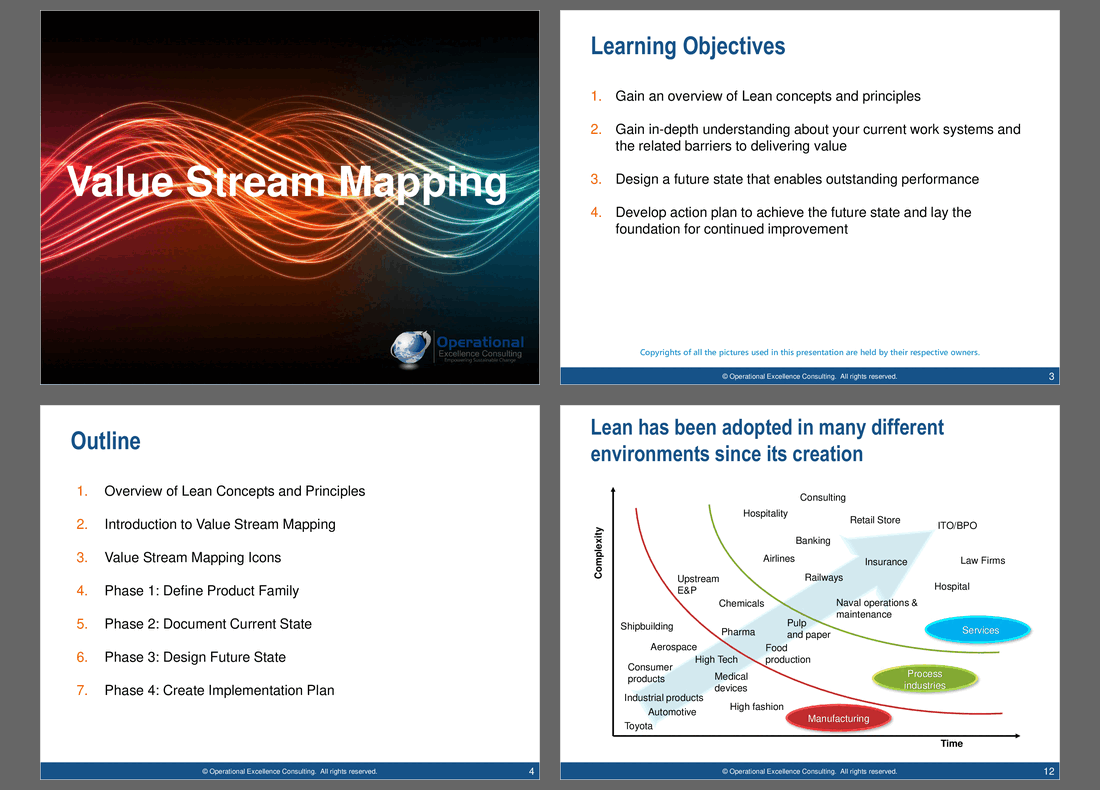
LEARNING OBJECTIVES
1. Gain an overview of Lean concepts and principles.
2. Gain in-depth understanding about your current work systems and the related barriers to delivering value.
3. Design a future state that enables outstanding performance.
4. Develop action plan to achieve the future state and lay the foundation for continued improvement.
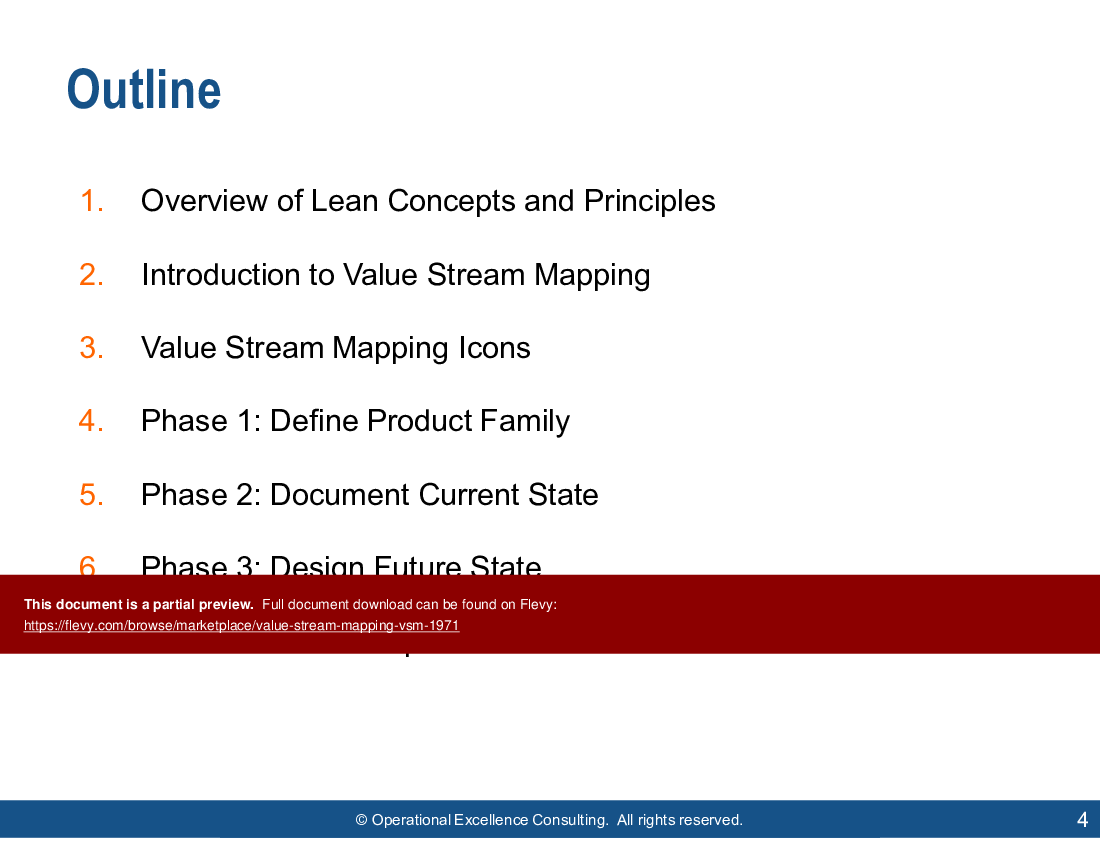
CONTENTS
1. Overview of Lean Thinking
• What is Lean?
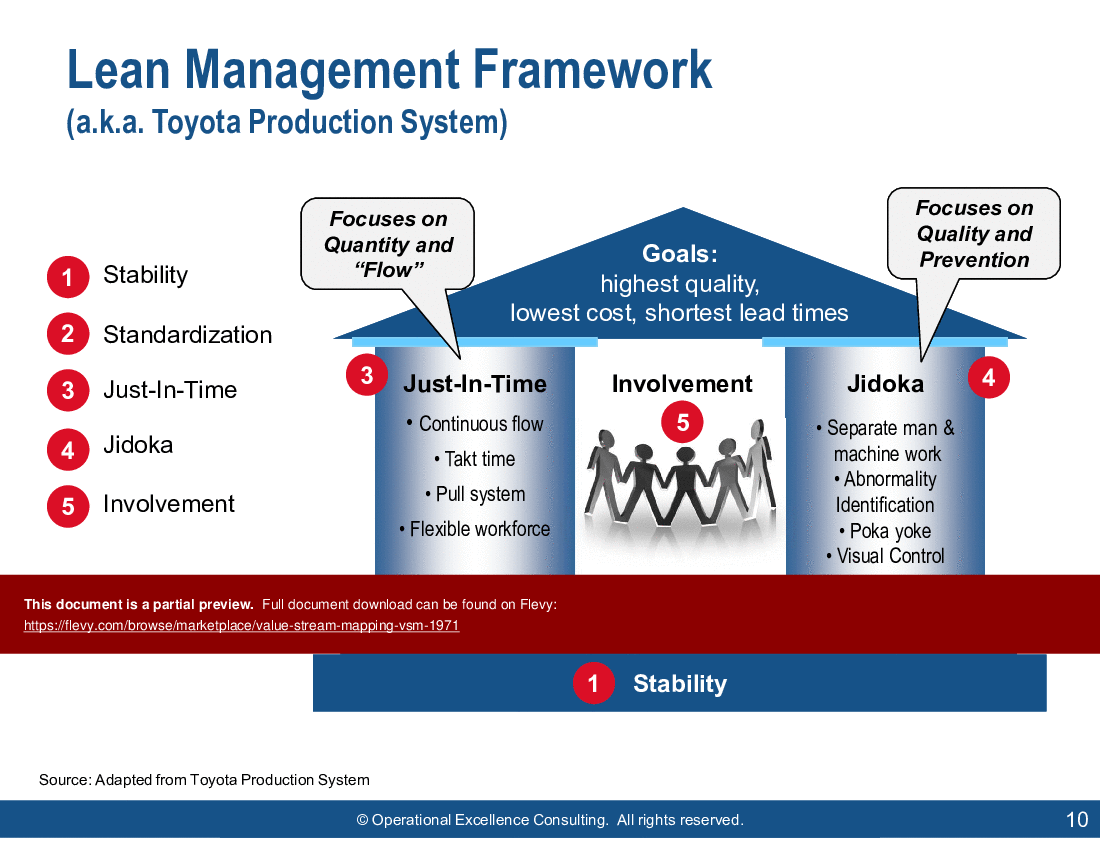
• Lean Management Framework
• Benefits of Lean
• What is Value?
• Lean Principles
• Eight Types of Waste
• Causes of Waste
• How to Eliminate Waste
2. Introduction to Value Stream Mapping
• Value Stream Defined
• Value Stream Mapping vs. Process Mapping
• Why Value Stream Mapping
• Value Stream Mapping Process
• Value Stream Examples
3. Value Stream Mapping Icons
• Basic Mapping Icons
• Key VSM Components: Manufacturing
• Key VSM Components: Office/Service
4. Phase 1: Define Product/Service Family
• Scoping: Define a Product/Service Family
• Value Stream Mapping Charter
• Value Stream Walk
• Key Value Stream Mapping Activities & Deliverables
• Interim Briefings
5. Phase 2: Document Current State
• Rules of Engagement for VSM Activities
• Step 1 – Label Map
• Step 2 – Define Process Blocks
• Step 3 – Define IT Systems
• Step 4 – Number the Process Blocks
• Step 5 – Add Data
• Step 6 – Create Timeline
• Step 7 – Identify VA and Non-VA Activities
• Step 8 – Define Goals & Gaps
6. Phase 3: Design Future State
• Future State Design Considerations
• Generating & Testing Ideas
• Moving to the Future: Kaizen Events
• Lean Techniques & Tools
• Future State Value Stream Map
• Projected Results
7. Phase 4: Create Implementation Plan
• Define Tasks
• Prioritization Matrix
• Future State Implementation Plan
• Tracking Results
• VSM: Actual Results
• Continuous Improvements
• VSM Summary
• Practical Tips for Value Stream Mapping
• Critical Success Factors
Appendix: VSM Template
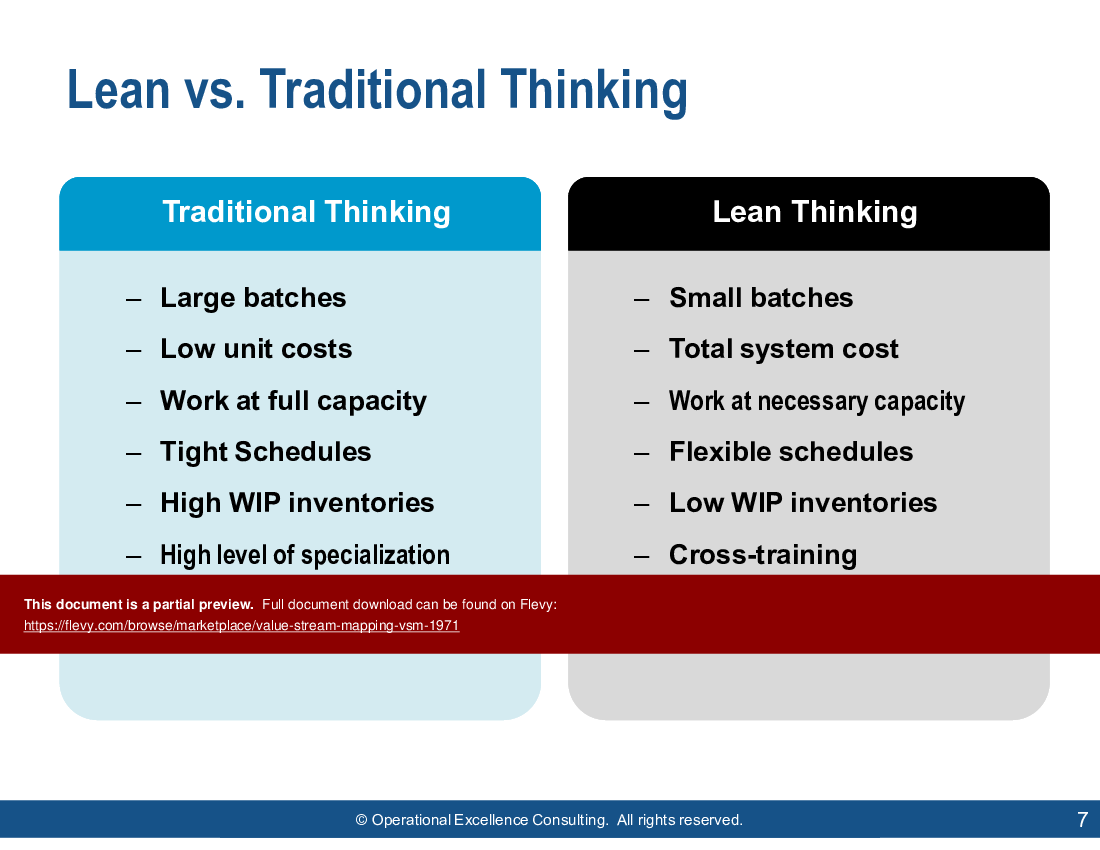
This comprehensive guide contrasts traditional thinking with lean principles, emphasizing small batches and total system cost. It also delves into common pitfalls in value stream mapping, ensuring your team avoids typical mistakes and maximizes efficiency.
Got a question about the product? Email us at support@flevy.com or ask the author directly by using the "Ask the Author a Question" form. If you cannot view the preview above this document description, go here to view the large preview instead.
Executive Summary
The Value Stream Mapping (VSM) presentation is a strategic tool designed to enhance operational efficiency by identifying and eliminating waste within processes. Created by Operational Excellence Consulting, this comprehensive deck guides users through Lean principles, enabling them to visualize current and future state processes. By employing VSM, organizations can streamline workflows, improve customer satisfaction, and foster a culture of continuous improvement. This presentation equips teams with the necessary frameworks to define product families, document current states, design future states, and create actionable implementation plans.
Who This Is For and When to Use
• Operations managers seeking to optimize process efficiency
• Lean practitioners aiming to implement VSM in their organizations
• Project leaders responsible for process improvement initiatives
• Teams involved in product development and service delivery
Best-fit moments to use this deck:
• During the initial stages of a Lean transformation project
• When conducting workshops focused on process improvement
• For training sessions aimed at building Lean capabilities within teams
Learning Objectives
• Gain an overview of Lean concepts and principles
• Understand current work systems and barriers to delivering value
• Design a future state that enables outstanding performance
• Develop an action plan to achieve the future state and lay the foundation for continuous improvement
• Identify and eliminate waste in processes
• Create a visual representation of value streams
Table of Contents
• Overview of Lean Concepts and Principles (page 5)
• Introduction to Value Stream Mapping (page 55)
• Value Stream Mapping Icons (page 67)
• Phase 1: Define Product Family (page 78)
• Phase 2: Document Current State (page 88)
• Phase 3: Design Future State (page 149)
• Phase 4: Create Implementation Plan (page 168)
Primary Topics Covered
• Lean Principles - Lean focuses on eliminating waste and enhancing value from the customer's perspective.
• Value Stream Mapping - A method for visualizing the flow of materials and information to identify waste and areas for improvement.
• Current State Analysis - Techniques for documenting existing processes to establish a baseline for improvement.
• Future State Design - Strategies for creating an optimized process that enhances flow and reduces waste.
• Implementation Planning - Steps for executing the future state plan, including task definition and resource allocation.
• Kaizen Events - Short-term, focused improvement activities aimed at achieving rapid results.
Deliverables, Templates, and Tools
• Value Stream Mapping charter template for defining project scope and objectives
• Current state value stream map template for documenting existing processes
• Future state value stream map template for visualizing optimized workflows
• Implementation plan template outlining tasks, responsibilities, and timelines
• Kaizen event planning template for organizing improvement activities
Slide Highlights
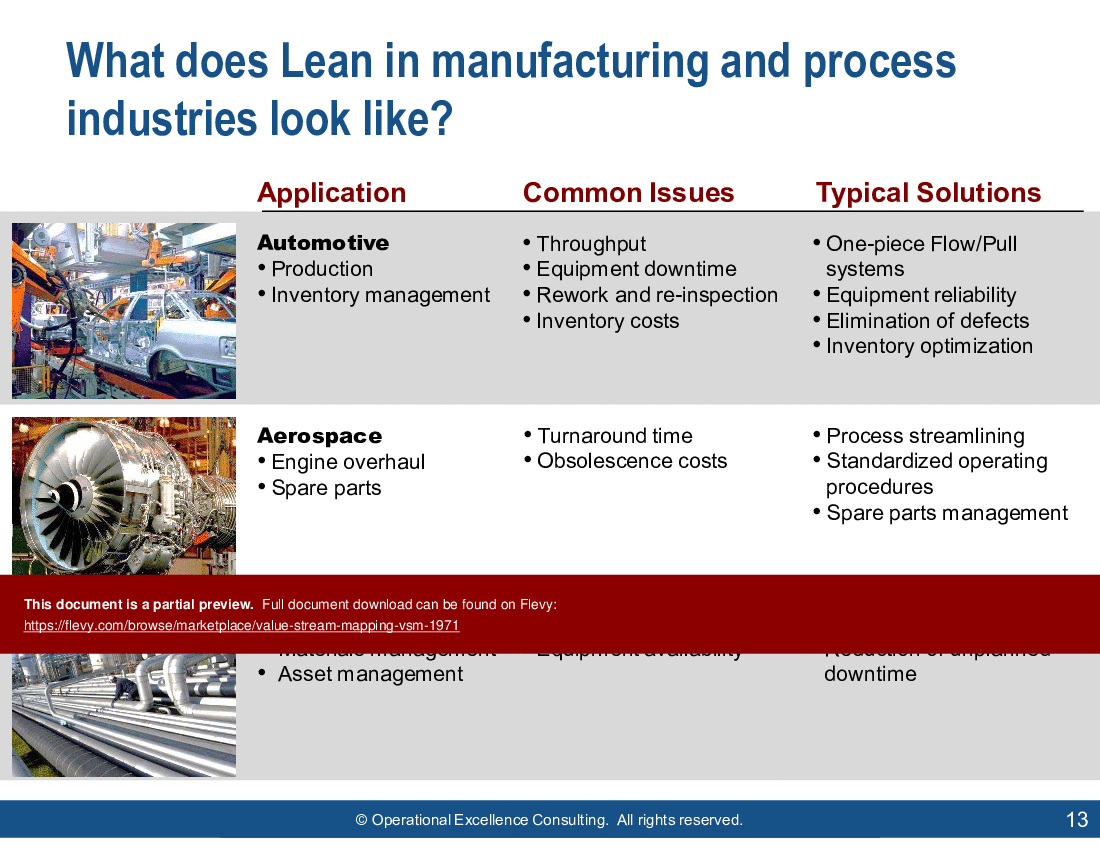
• Overview of Lean principles and their application in various industries
• Comparison of Value Stream Mapping and Process Mapping, highlighting their unique benefits
• Visual representations of current and future state value streams
• Detailed icons used in VSM to represent processes, information flow, and inventory
• Guidelines for conducting effective Value Stream Mapping sessions
Potential Workshop Agenda
Value Stream Mapping Introduction (60 minutes)
• Overview of Lean principles and VSM
• Discussion on the importance of waste elimination
Current State Mapping Session (90 minutes)
• Hands-on activity to document current processes
• Identification of barriers to flow and waste
Future State Design Workshop (90 minutes)
• Collaborative design of optimized processes
• Prioritization of improvement initiatives
Implementation Planning Session (60 minutes)
• Development of actionable tasks and timelines
• Assignment of responsibilities and resources
Customization Guidance
• Tailor the VSM charter to reflect specific organizational goals and objectives
• Adjust the current state mapping process to include relevant metrics and data specific to your operations
• Modify the future state design to align with unique customer requirements and business needs
• Incorporate organizational terminology and frameworks into the presentation for better alignment
Secondary Topics Covered
• The role of leadership in Lean transformations
• Techniques for fostering a culture of continuous improvement
• The impact of Lean methodologies on customer satisfaction
• Best practices for conducting effective Kaizen events
FAQ
What is Value Stream Mapping?
Value Stream Mapping is a Lean tool that visualizes the flow of materials and information in a process, helping to identify waste and areas for improvement.
How can VSM improve operational efficiency?
By identifying non-value-added activities and streamlining processes, VSM enables organizations to enhance workflow, reduce cycle times, and improve overall efficiency.
What are the key phases of the VSM process?
The key phases include defining the product family, documenting the current state, designing the future state, and creating an implementation plan.
Who should participate in VSM workshops?
Cross-functional teams, including operations, management, and frontline employees, should participate to ensure comprehensive insights and buy-in.
How often should VSM be conducted?
VSM should be conducted regularly, especially during Lean transformation initiatives, to continuously identify improvement opportunities.
What tools are used in VSM?
Common tools include process mapping software, data collection templates, and visual management boards.
How do I measure the success of VSM initiatives?
Success can be measured through key performance indicators such as lead time reduction, improved quality metrics, and increased customer satisfaction.
What challenges might arise during VSM implementation?
Challenges may include resistance to change, lack of engagement from team members, and difficulties in accurately documenting processes.
Glossary
• Value Stream - All activities required to fulfill a customer request from order to delivery.
• Lean - A management philosophy focused on waste elimination and value creation.
• Kaizen - A continuous improvement approach that involves all employees in identifying and implementing improvements.
• Current State Map - A visual representation of existing processes and workflows.
• Future State Map - A visual representation of optimized processes aimed at enhancing efficiency.
• Takt Time - The rate at which products must be produced to meet customer demand.
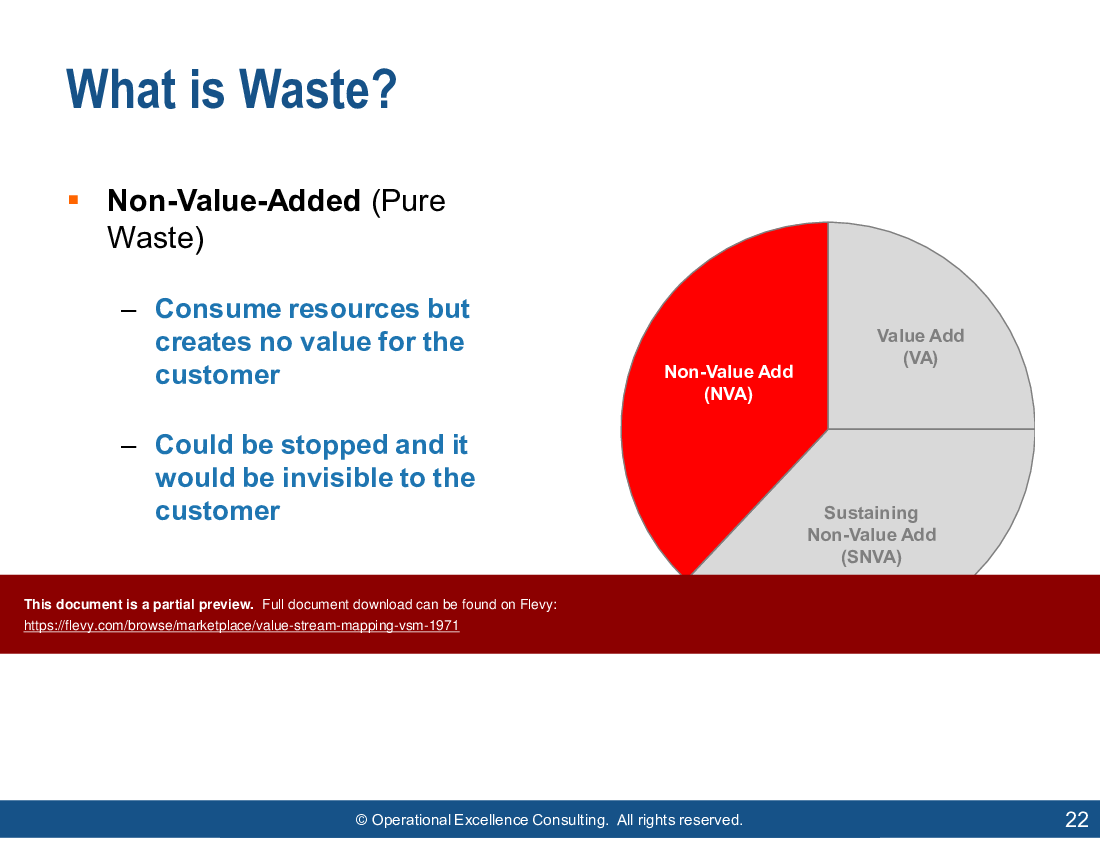
• Waste - Any activity that does not add value to the customer.
• Cycle Time - The total time taken to complete a process from start to finish.

• Lead Time - The total time from when an order is placed until it is fulfilled.
• Continuous Improvement - An ongoing effort to enhance products, services, or processes.
• Process Mapping - A technique for visually documenting the steps in a process.
• Pull System - A production approach that initiates work based on customer demand rather than pushing products through the system.
• Push System - A production approach that pushes products through the system based on forecasts or schedules.
Source: Best Practices in Value Stream Mapping PowerPoint Slides: Value Stream Mapping (VSM) PowerPoint (PPTX) Presentation Slide Deck, Operational Excellence Consulting
This document is available as part of the following discounted bundle(s):
Save %!
Lean Foundations for Managers Toolkit
This bundle contains 4 total documents. See all the documents to the right.
|
Receive our FREE presentation on Operational Excellence
This 50-slide presentation provides a high-level introduction to the 4 Building Blocks of Operational Excellence. Achieving OpEx requires the implementation of a Business Execution System that integrates these 4 building blocks. |